


Besides the brush-making machine itself, customers may need several auxiliary facilities depending on their production requirements:
Meixin can help customers evaluate the complete production setup, including the main brush-making machine and necessary supporting equipment.
- An air compressor is required, since Meixin machines use a pneumatic system.
- A voltage stabilizer or generator is recommended if the factory has unstable voltage conditions.
- Filament cutting machines, brush trimming machines, and other supporting equipment, depending on the production process and desired finished product quality.

Normally, each Meixin tufting machine requires one operator for daily production. The operator mainly handles loading brush bases, monitoring machine operation, and unloading finished products, while the automatic tufting or drilling and tufting process reduces repetitive manual work and improves production efficiency.
The exact labor requirement may vary depending on machine model, brush product size, production volume, and factory workflow. For customers operating multiple machines or larger production lines, Meixin can also provide advice on production layout and equipment arrangement.
Share your expected production capacity with Meixin, and we can help estimate the suitable equipment and labor requirements.

Yes. Meixin designs brush-making machines with a focus on user-friendly operation, practical control systems, and efficient operator training.
The machines are equipped with clear control interfaces and operating systems that help operators understand machine functions and production settings more easily. For new customers, Meixin provides technical guidance and training support, and key functions such as drilling, tufting, and parameter adjustment are designed to be practical and manageable.
Through proper training and daily maintenance, operators can quickly adapt to the equipment and maintain stable production performance.
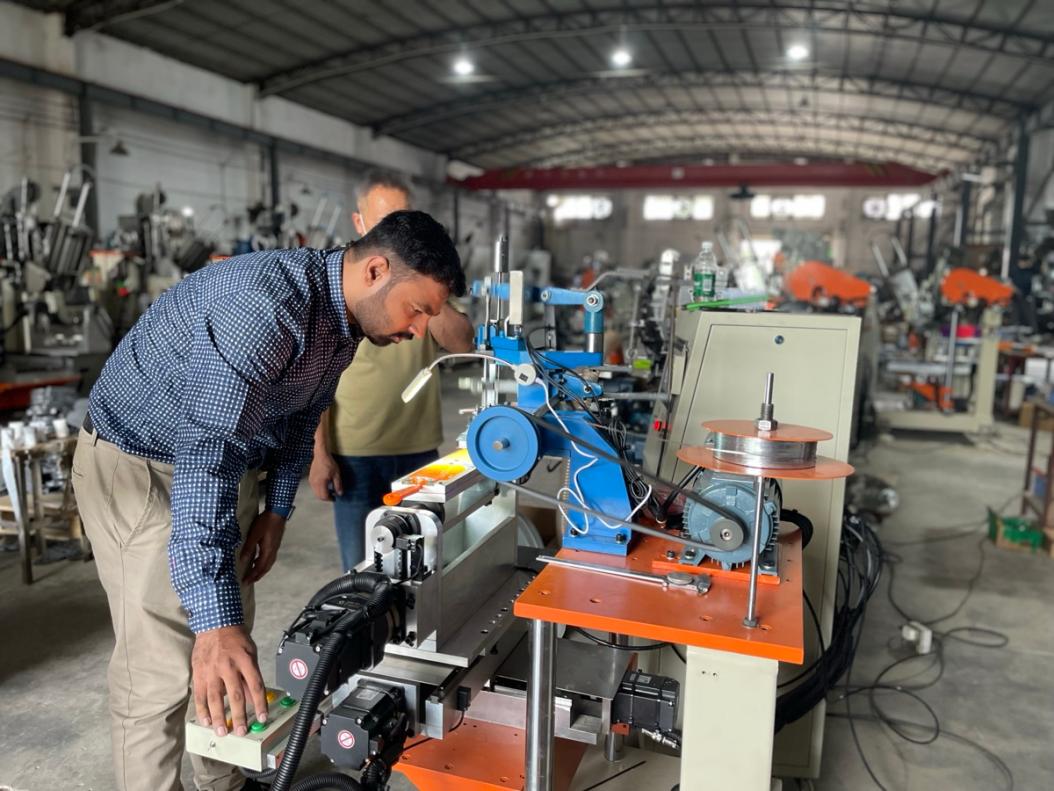
Meixin brush-making machines are semi-automatic: the machine automatically performs key processes such as tufting or drilling and tufting, while operators mainly handle loading and unloading brush bases and monitoring production. This semi-automatic design provides a balance between production efficiency, equipment flexibility, and operating convenience, and is suitable for many brush manufacturers who require improved productivity without investing in fully automated production lines.
The automation level can also be adjusted according to the customer's production volume, labor conditions, and product requirements — contact Meixin with your production expectations, and our team can recommend the most suitable automation solution.

Meixin brush-making machines produce approximately 150–200 broom or brush pieces per hour, with an average speed of 5–7 holes per second under normal operating conditions. Actual output depends on the brush structure, machine configuration, operator efficiency, and production requirements — factors such as brush size, hole arrangement, bristle density, and loading/unloading time can influence the final result.
Meixin focuses not only on machine speed but also on production stability and consistent product quality, so a suitable machine configuration helps customers achieve better overall production efficiency.
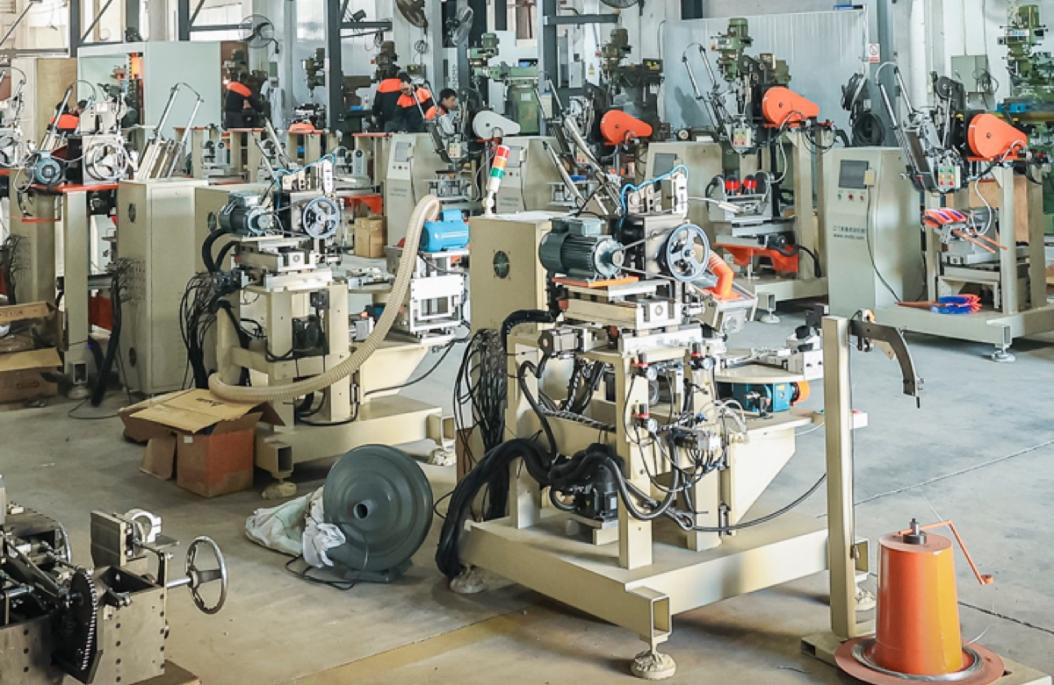
The main difference is whether the brush base already has holes before the bristle insertion process. A standard tufting machine is designed for brush bases with pre-existing holes: it performs the bristle insertion process by accurately placing filaments into the prepared holes.
A drilling and tufting machine integrates two processes — it drills holes into the brush base, then inserts the bristles automatically — and is suitable for brush products where the base does not have pre-drilled holes.
The choice depends on your production process, brush design, and manufacturing requirements. For customers producing customized brushes or requiring higher production integration, drilling and tufting machines can reduce manual processes and improve efficiency.
|
对比项Comparison items |
单植毛机 Tufting Machine |
钻植一体机 Drilling & Tufting Machine |
|
适用刷头Suitable Brush Heads |
已预钻孔的刷头Pre-drilled brush heads |
未钻孔的刷头Undrilled brush heads |
|
工序Process |
仅植毛(插丝)Wire insertion only |
钻孔 + 植毛一体化Drilling + Wire insertion integrated |
|
自动化Automated |
半自动Semi-automated |
集成度更高、减少人工工序 Higher integration, reduced manual processes |
|
占地Occupancy |
约 2 m² Approximately 2 m² |
约 3–4 m² Approximately 3–4 m² |

To recommend the most suitable brush-making machine, Meixin usually requires detailed information about your product and production requirements:
Physical samples are especially helpful because they allow our engineers to evaluate the actual brush structure, hole arrangement, and tufting requirements. Based on this information, Meixin can determine whether a standard tufting machine, drilling and tufting machine, or customized solution is more suitable.
- Brush samples or product drawings
- Brush dimensions and structure
- Brush base material
- Bristle material and specifications
- Required production capacity
- Expected automation level
- Other technical requirements
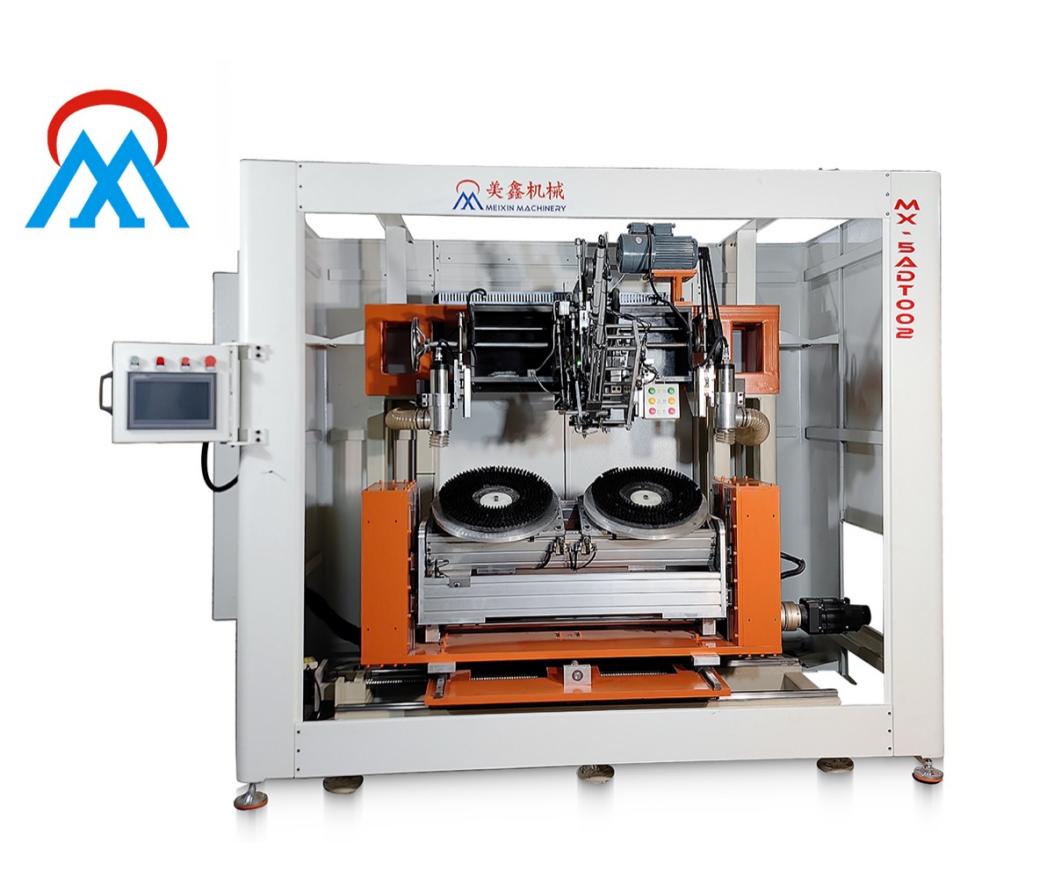
Meixin brush-making machines can produce different brush models by adjusting or changing specific components according to product requirements — including clamps, fixtures, tufting tools, or related machine settings. The ability to switch between different brush models depends on brush base dimensions, hole pattern, bristle specifications, product structure, and machine configuration.
For customers producing multiple brush products, Meixin can evaluate whether one flexible machine can meet their requirements or whether dedicated equipment would provide better production efficiency. By selecting suitable tooling and programming settings, customers can improve production flexibility without purchasing separate machines for every brush type.
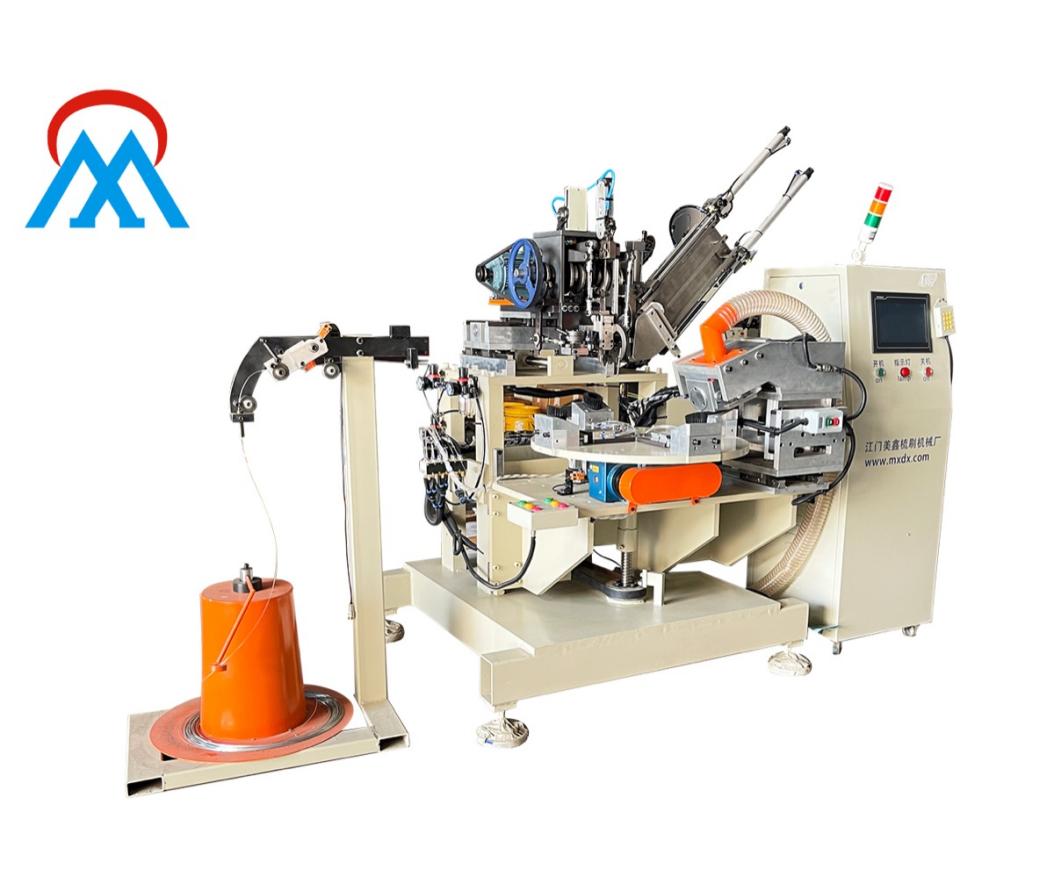
In theory, a high-axis brush-making machine may be able to produce some products that require fewer axes, but this depends on the machine design and configuration established during the manufacturing stage. A machine with more axes does not automatically guarantee compatibility with all lower-axis products — during machine design, factors such as axis function matching, machine height, fixture structure, movement range, and programming requirements must be considered.
For this reason, Meixin does not simply recommend the highest-axis machine available; instead, we evaluate the customer's current and future product range to determine the most practical solution. Choosing the correct machine configuration helps ensure stable operation, easier maintenance, and better cost efficiency.
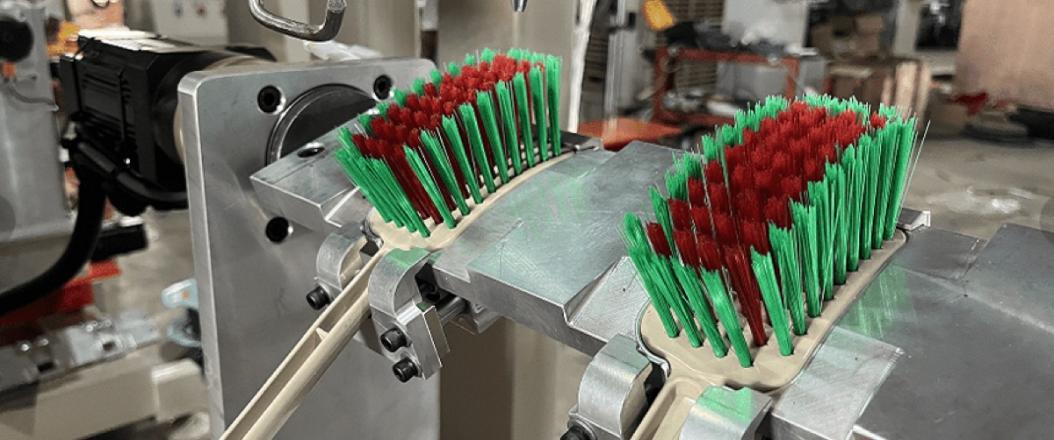
The required number of axes is mainly determined by the brush design and production requirements, rather than simply the desired machine specification. Factors that influence axis selection include: brush shape and complexity; hole arrangement and drilling pattern; required tufting angle and movement range; production efficiency requirements; and level of automation.
For simple brush products with regular structures, a lower-axis machine may already provide efficient production; for more complex brushes requiring multi-direction movement or special tufting patterns, a higher-axis configuration may be more suitable. At Meixin, our engineers evaluate the complete product requirements before recommending a machine, helping customers avoid unnecessary investment in excessive configurations while ensuring the machine can meet future production needs.
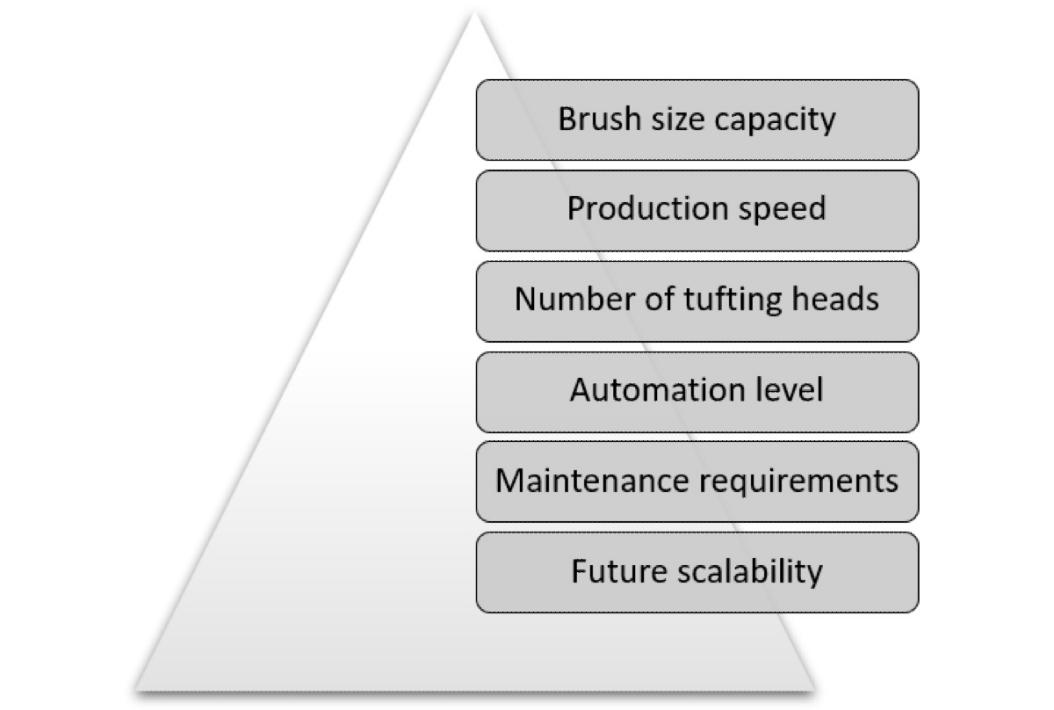
The number of axes in a brush-making machine refers to the number of independent movement directions controlled by the machine system — one axis represents one movement direction, usually driven by one motor. For example, a 2-axis brush-making machine achieves movement in two directions, while a 5-axis machine provides more flexible movement capability and can handle more complex brush structures and production requirements.
Meixin generally offers 2-axis, 3-axis, 4-axis, and 5-axis brush-making machines. A higher-axis machine provides greater flexibility for complex products, including irregular brush shapes, special hole arrangements, or more complicated tufting patterns — however, more axes do not always mean better performance; the suitable configuration depends on the actual brush design, production requirements, and automation goals.
Provide your brush structure and application requirements, and Meixin can help determine the appropriate axis configuration.

Meixin provides a wide range of brush-making machines, including 2-axis to 5-axis standard models, single tufting machines, and integrated drilling and tufting machines to meet different brush production requirements. Our standard tufting machines are designed for brush bases that already have pre-drilled holes, using a dedicated tufting head to insert bristles efficiently.
For brush bases without holes, Meixin offers integrated drilling and tufting machines — including 1-drill-1-tuft and 2-drill-1-tuft configurations — which complete both hole drilling and bristle implantation in one production process. According to different brush structures and production needs, Meixin can also provide different machine head configurations and stroke options to achieve better compatibility with various brush designs.
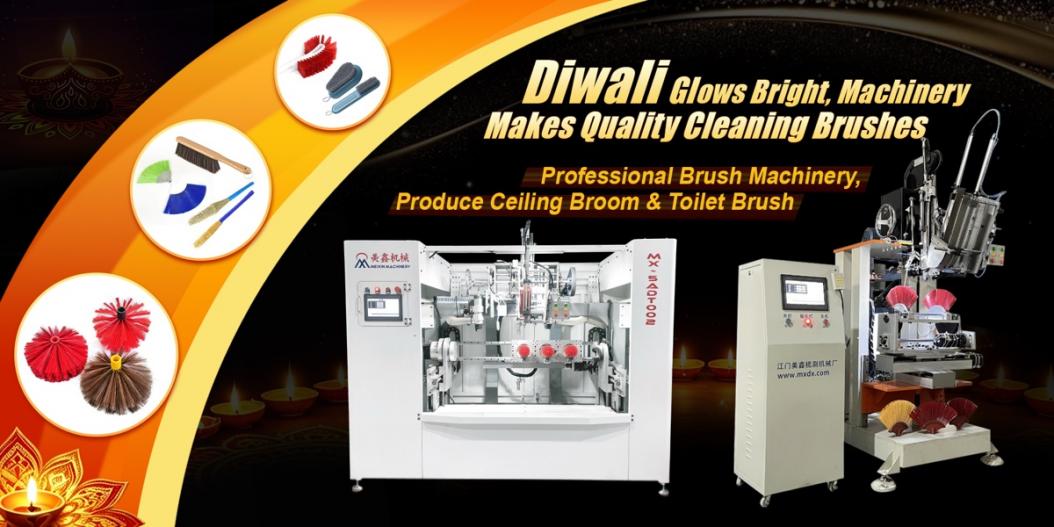
A leader in this industry, specializing in brush making machine line for more than 38 years.
QUICK LINKS
PRODUCTS
CONTACT US
Contact Person: Leo
Email: Mxdx@Mxbrushmachinery.Com
Tel: +86 13232438671
Skype/Facebook: +86 13232438671
Fax: 0750-6575221
Address: Heqiaolingwu Road, Sanyi Industrial Estate, Siqian Town, Xinhui District, Jiangmen City, Guangdong Province, China (Pc:529159)Pe 2019