


In theory, a high-axis brush-making machine may be able to produce some products that require fewer axes, but this depends on the machine design and configuration established during the manufacturing stage. A machine with more axes does not automatically guarantee compatibility with all lower-axis products — during machine design, factors such as axis function matching, machine height, fixture structure, movement range, and programming requirements must be considered.
For this reason, Meixin does not simply recommend the highest-axis machine available; instead, we evaluate the customer's current and future product range to determine the most practical solution. Choosing the correct machine configuration helps ensure stable operation, easier maintenance, and better cost efficiency.
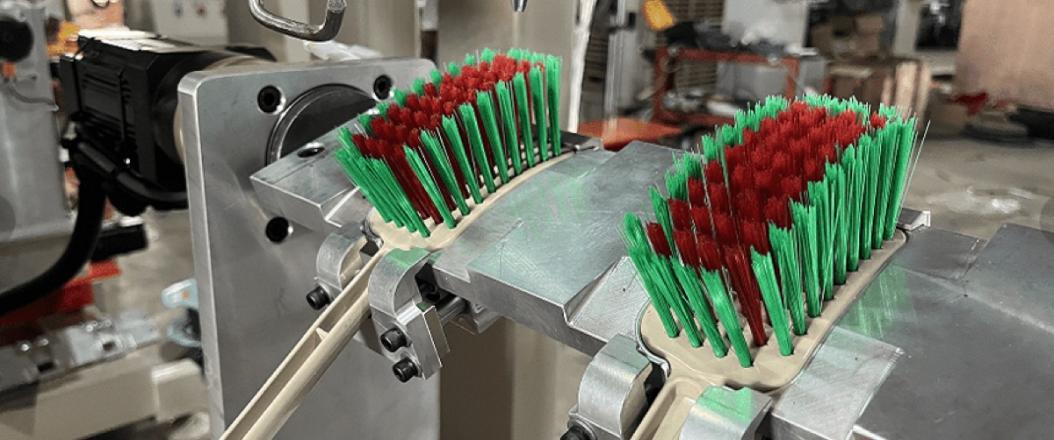
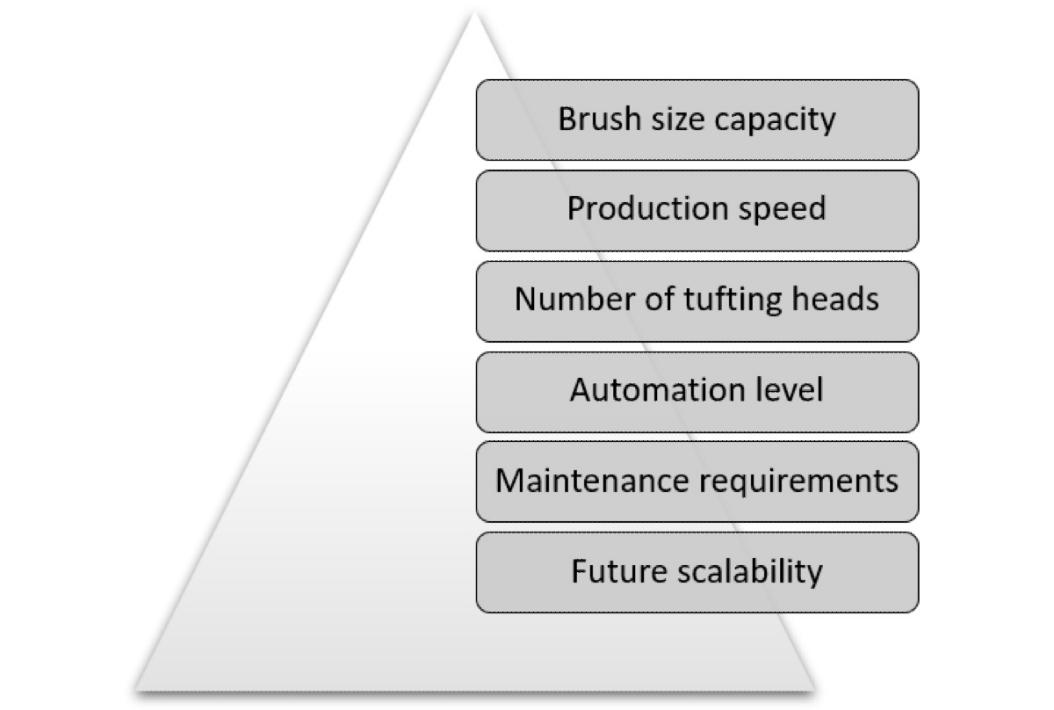
The required number of axes is mainly determined by the brush design and production requirements, rather than simply the desired machine specification. Factors that influence axis selection include: brush shape and complexity; hole arrangement and drilling pattern; required tufting angle and movement range; production efficiency requirements; and level of automation.
For simple brush products with regular structures, a lower-axis machine may already provide efficient production; for more complex brushes requiring multi-direction movement or special tufting patterns, a higher-axis configuration may be more suitable. At Meixin, our engineers evaluate the complete product requirements before recommending a machine, helping customers avoid unnecessary investment in excessive configurations while ensuring the machine can meet future production needs.
The number of axes in a brush-making machine refers to the number of independent movement directions controlled by the machine system — one axis represents one movement direction, usually driven by one motor. For example, a 2-axis brush-making machine achieves movement in two directions, while a 5-axis machine provides more flexible movement capability and can handle more complex brush structures and production requirements.
Meixin generally offers 2-axis, 3-axis, 4-axis, and 5-axis brush-making machines. A higher-axis machine provides greater flexibility for complex products, including irregular brush shapes, special hole arrangements, or more complicated tufting patterns — however, more axes do not always mean better performance; the suitable configuration depends on the actual brush design, production requirements, and automation goals.
Provide your brush structure and application requirements, and Meixin can help determine the appropriate axis configuration.

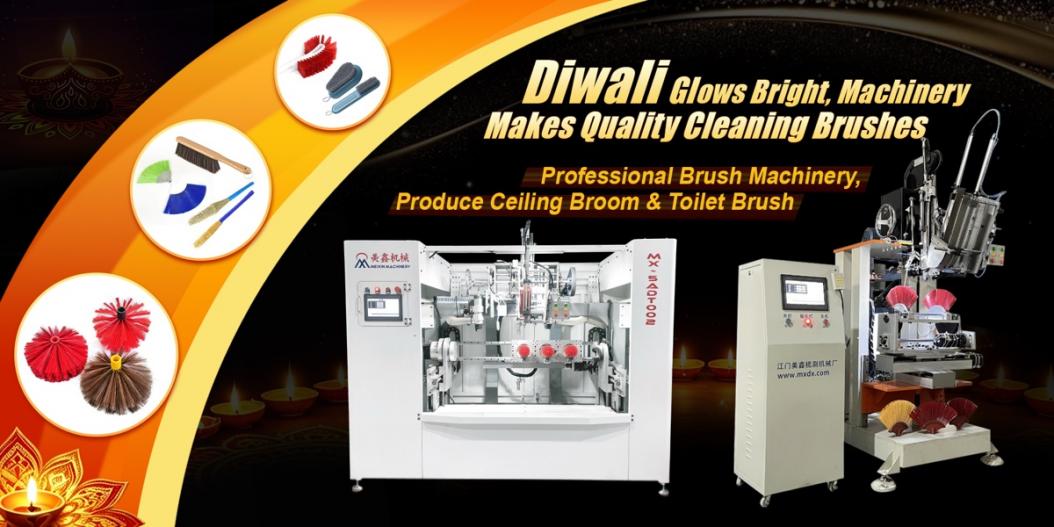
Meixin provides a wide range of brush-making machines, including 2-axis to 5-axis standard models, single tufting machines, and integrated drilling and tufting machines to meet different brush production requirements. Our standard tufting machines are designed for brush bases that already have pre-drilled holes, using a dedicated tufting head to insert bristles efficiently.
For brush bases without holes, Meixin offers integrated drilling and tufting machines — including 1-drill-1-tuft and 2-drill-1-tuft configurations — which complete both hole drilling and bristle implantation in one production process. According to different brush structures and production needs, Meixin can also provide different machine head configurations and stroke options to achieve better compatibility with various brush designs.
A leader in this industry, specializing in brush making machine line for more than 38 years.
QUICK LINKS
PRODUCTS
CONTACT US
Contact Person: Leo
Email: Mxdx@Mxbrushmachinery.Com
Tel: +86 13232438671
Skype/Facebook: +86 13232438671
Fax: 0750-6575221
Address: Heqiaolingwu Road, Sanyi Industrial Estate, Siqian Town, Xinhui District, Jiangmen City, Guangdong Province, China (Pc:529159)Pe 2019